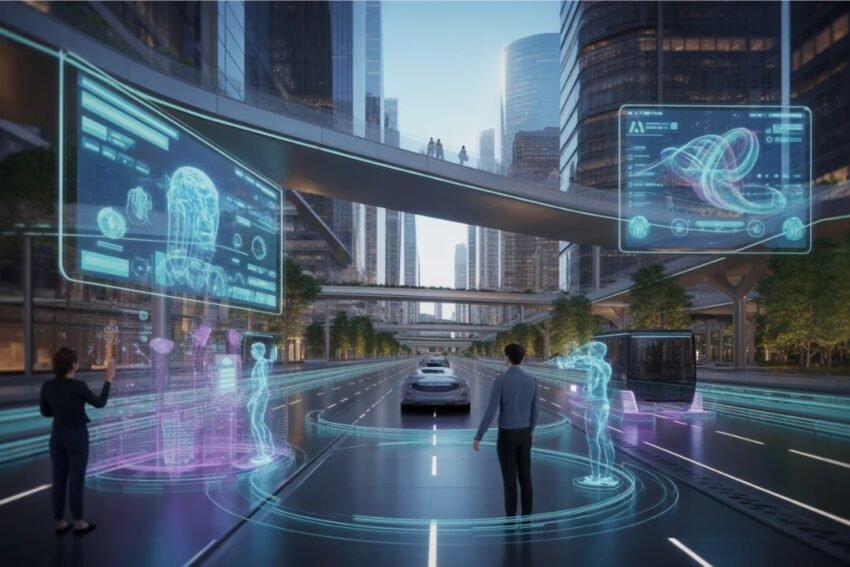
The world is evolving faster than ever before. What once seemed like science fiction is now becoming reality, driven by rapid technological advancements and human creativity. By 2035, we can expect groundbreaking innovations that will transform the way we live, work, communicate, and even think. From artificial intelligence to space exploration, these innovations will not only reshape industries but also redefine human potential.
In this article, we will explore the top 10 future innovations that are expected to change the world by 2035, and how they will impact our daily lives.
1. Artificial General Intelligence (AGI)
Artificial Intelligence (AI) is already part of our lives, but by 2035, we may witness the rise of Artificial General Intelligence (AGI)—machines that can think, learn, and make decisions like humans.
Unlike current AI systems that are limited to specific tasks, AGI will:
- Solve complex global problems
- Perform creative tasks like humans
- Automate high-level decision-making
Impact:
AGI could revolutionize industries such as healthcare, finance, and education. However, it also raises ethical concerns about control, employment, and safety.
2. Quantum Computing
Quantum computing is set to become one of the most powerful technologies of the future. Unlike traditional computers, quantum computers can process massive amounts of data simultaneously.
By 2035, quantum computing may:
- Break complex encryption systems
- Accelerate drug discovery
- Solve problems in seconds that would take years today
Impact:
This innovation will transform cybersecurity, scientific research, and global industries.
3. Brain-Computer Interfaces (BCIs)
Imagine controlling devices with your thoughts. Brain-Computer Interfaces (BCIs) will make this possible by directly connecting the human brain to computers.
By 2035, BCIs could:
- Help paralyzed individuals regain movement
- Enhance memory and cognitive abilities
- Enable communication without speech
Impact:
BCIs will blur the line between humans and machines, opening new possibilities in healthcare and human enhancement.
4. Personalized Medicine and Gene Editing
Healthcare is shifting toward personalization. With advancements in gene editing technologies like CRISPR, treatments will be tailored to individual genetic profiles.
Future developments may include:
- Curing genetic diseases
- Preventing illnesses before they occur
- Customized treatments for cancer
Impact:
People will live longer, healthier lives with fewer side effects from treatments.
5. Autonomous Transportation
Self-driving vehicles are already being tested, but by 2035, fully autonomous transportation systems could become mainstream.
This includes:
- Self-driving cars and trucks
- Autonomous public transport
- AI-controlled traffic systems
Impact:
- Reduced accidents
- Lower transportation costs
- Increased efficiency in logistics
Cities will become safer and more organized.
6. Renewable Energy Breakthroughs
The future of energy lies in sustainable and renewable sources. By 2035, major advancements are expected in solar, wind, and energy storage technologies.
Innovations may include:
- Ultra-efficient solar panels
- Advanced battery storage systems
- Clean hydrogen energy
Impact:
These developments will reduce dependence on fossil fuels and help combat climate change.
7. Smart Cities and IoT Expansion
The Internet of Things (IoT) will play a major role in building smart cities where everything is interconnected.
By 2035, cities could feature:
- Smart traffic management
- Automated waste systems
- Real-time energy optimization
Impact:
Urban living will become more efficient, sustainable, and comfortable.
8. Space Exploration and Colonization
Humanity is looking beyond Earth. By 2035, space exploration could reach new heights with missions to Mars and beyond.
Expected advancements:
- Permanent lunar bases
- Mars colonization efforts
- Space tourism
Impact:
This will open new economic opportunities and expand human civilization beyond Earth.
9. Advanced Robotics and Automation
Robots are becoming more intelligent and capable. By 2035, advanced robotics will handle tasks across industries.
Applications include:
- Healthcare robots assisting surgeries
- Industrial automation
- Personal assistant robots
Impact:
While productivity will increase, there may be challenges related to job displacement.
10. Augmented Reality (AR) and Virtual Reality (VR)
AR and VR technologies will transform how we interact with digital content.
By 2035, they could:
- Replace traditional screens
- Revolutionize education and training
- Create immersive virtual worlds
Impact:
Work, entertainment, and communication will become more interactive and engaging.
Conclusion
The next decade will bring innovations that will fundamentally reshape our world. From intelligent machines to space exploration, these technologies will create new opportunities while also posing challenges.
To stay ahead in this rapidly changing world, individuals and businesses must:
- Embrace new technologies
- Continuously learn new skills
- Adapt to changing environments
The future is not just something that happens—it is something we build. By understanding these innovations, we can prepare ourselves for a world that is smarter, faster, and more connected than ever before.
Final Thoughts
By 2035, the world will look very different from today. These innovations are not just trends—they are powerful forces that will define the future of humanity. Whether it’s improving healthcare, solving global problems, or expanding into space, the possibilities are endless.