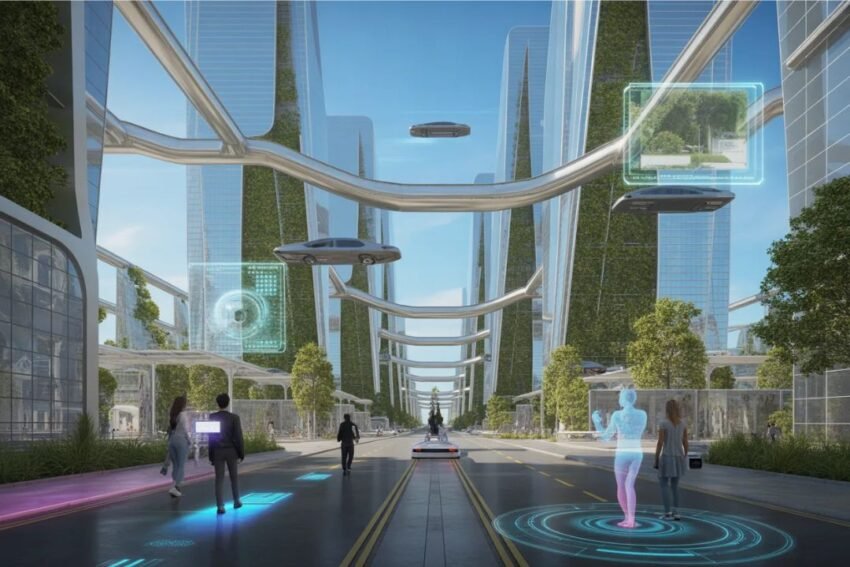
The pace of technological advancement is accelerating at an unprecedented rate, transforming every aspect of human life. What once seemed impossible is now becoming reality, as next-generation technologies redefine how we live, work, communicate, and interact with the world. From intelligent machines to life-saving medical breakthroughs, these innovations are not just enhancing convenience—they are reshaping the very fabric of human existence.
In this comprehensive article, we explore the next-generation technologies that are set to shape human life in the coming decades, their real-world applications, and their long-term impact on society.
The Rise of Intelligent Machines
Artificial intelligence is no longer limited to basic automation. The next generation of AI systems will be capable of learning, adapting, and making complex decisions with minimal human intervention.
These advanced systems will:
- Analyze vast amounts of data in seconds
- Predict outcomes with high accuracy
- Assist in solving global challenges such as climate change and disease outbreaks
In everyday life, AI will become more personal. Virtual assistants will understand emotions, preferences, and behavior patterns, making interactions more natural and human-like.
Impact on human life:
People will rely on intelligent systems for decision-making, productivity, and even emotional support, creating a deep integration between humans and machines.
Human Augmentation and Bioengineering
One of the most transformative areas of innovation is human augmentation. Scientists are working on technologies that enhance physical and cognitive abilities beyond natural limits.
Key developments include:
- Bionic limbs with full sensory feedback
- Genetic engineering to eliminate inherited diseases
- Brain enhancements to improve memory and learning
These advancements will enable individuals to overcome physical limitations and lead healthier, more capable lives.
Impact:
Human potential will expand significantly, but ethical questions about fairness and access will arise.
The Evolution of Healthcare Technology
Healthcare is undergoing a revolution driven by data, AI, and biotechnology. Future innovations will focus on prevention, personalization, and precision.
Emerging trends include:
- AI-powered diagnostics that detect diseases early
- Wearable devices that monitor health in real time
- Personalized treatment plans based on genetic data
Telemedicine and remote surgeries will also become more common, allowing patients to access high-quality care regardless of location.
Impact:
Life expectancy will increase, and healthcare systems will become more efficient and accessible.
Smart Environments and Connected Living
The concept of smart homes is evolving into fully connected ecosystems where devices communicate seamlessly with each other.
Future smart environments will include:
- Homes that adjust lighting, temperature, and security automatically
- Cities that manage traffic, pollution, and energy usage intelligently
- Workspaces that adapt to employee needs for maximum productivity
The Internet of Things (IoT) will play a central role in creating these interconnected systems.
Impact:
Daily life will become more convenient, efficient, and sustainable.
Sustainable and Clean Energy Innovations
As the world faces climate challenges, next-generation energy solutions are becoming essential. Renewable energy technologies are advancing rapidly, making clean energy more efficient and affordable.
Key innovations include:
- Next-generation solar panels with higher efficiency
- Advanced energy storage systems
- Green hydrogen as a clean fuel alternative
These technologies will reduce reliance on fossil fuels and help mitigate environmental damage.
Impact:
A cleaner environment and more sustainable future for coming generations.
Autonomous Systems and Robotics
Automation is entering a new phase with intelligent robots capable of performing complex tasks in dynamic environments.
Future applications include:
- Self-driving vehicles reducing traffic accidents
- Delivery drones improving logistics
- Robots assisting in elderly care and healthcare
These systems will not only increase efficiency but also take over dangerous and repetitive tasks.
Impact:
Workforces will shift, requiring new skills and adaptation to changing job roles.
Immersive Digital Experiences
The future of digital interaction lies in immersive technologies such as augmented reality (AR) and virtual reality (VR).
These technologies will:
- Transform education through interactive learning
- Revolutionize entertainment with immersive experiences
- Enable virtual collaboration in work environments
People will be able to interact with digital content as if it were part of the real world.
Impact:
The boundary between physical and digital realities will blur, creating new forms of communication and creativity.
Space Technology and Exploration
Space is becoming the next frontier for innovation. Advancements in space technology are opening new possibilities for exploration and commercialization.
Future developments may include:
- Human settlements on the Moon and Mars
- Asteroid mining for valuable resources
- Expansion of satellite networks for global connectivity
Private companies and governments alike are investing heavily in this sector.
Impact:
Human civilization may extend beyond Earth, unlocking new opportunities and challenges.
Advanced Communication Technologies
Communication is evolving beyond traditional methods. Next-generation networks will enable faster, more reliable, and more immersive connections.
Innovations include:
- 6G networks with ultra-high speeds
- Real-time language translation
- Holographic communication
These technologies will bring people closer together, regardless of distance or language barriers.
Impact:
Global collaboration and connectivity will reach new heights.
Ethical and Social Implications
While next-generation technologies offer immense benefits, they also raise important ethical and social questions.
Key concerns include:
- Data privacy and security
- Job displacement due to automation
- Inequality in access to advanced technologies
Addressing these challenges will require collaboration between governments, organizations, and individuals.
Conclusion
Next-generation technologies are not just shaping the future—they are actively transforming the present. As these innovations continue to evolve, they will redefine what it means to be human, creating a world that is more connected, intelligent, and efficient.
However, with great power comes great responsibility. It is essential to ensure that these technologies are developed and used in ways that benefit all of humanity.
Final Thoughts
The future is being built today through innovation and imagination. By understanding and embracing these next-generation technologies, we can prepare for a world filled with opportunities and challenges.
The question is no longer whether technology will change our lives—but how we choose to adapt and grow with it.