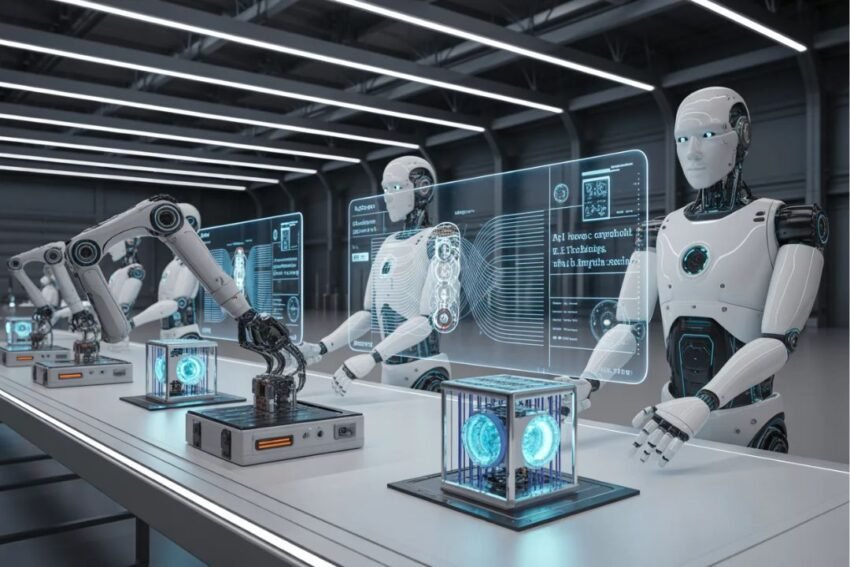
Robotics is evolving faster than ever, influencing how people live, work, and interact with machines. In 2026, robotics trends and emerging technologies are shaping industries, empowering automation, and redefining human‑machine collaboration. From AI‑driven robots to autonomous systems and bio‑inspired machines, the future is intelligent, connected, and highly adaptable.
This human‑written, SEO‑optimized article highlights the top robotics trends and emerging technologies to watch in 2026 and beyond — with real‑world applications, key advancements, and future potential.
🚀 Why Robotics Trends Matter in 2026
Robotics is no longer just industrial automation. Today’s robots are:
- Smart: Powered by Artificial Intelligence (AI) and Machine Learning (ML)
- Connected: Integrated through the Internet of Things (IoT) and 5G
- Collaborative: Designed to work alongside humans
- Autonomous: Capable of independent decision‑making
These trends are reshaping industries like healthcare, logistics, manufacturing, agriculture, and even everyday life.
🔥 Top Robotics Trends in 2026
1. AI‑Powered Autonomous Robots
Robots are now capable of making decisions in real time without human intervention. Powered by advanced machine learning algorithms, these robots can:
- Navigate complex environments
- Respond to dynamic changes
- Learn from past interactions
Use Cases:
- Warehouse logistics
- Delivery robots
- Automated inspection drones
Impact: Increases efficiency and reduces human workload.
2. Collaborative Robots (Cobots)
Cobots are built to work alongside humans safely without physical barriers. They support employees rather than replace them.
Applications:
- Assembly line collaboration
- Quality inspection
- Medical assistance in hospitals
Why It Matters: Enhances productivity and workplace safety.
3. Swarm Robotics
Swarm robotics is inspired by nature — like flocks of birds or colonies of ants — where many robots work together toward a common goal.
Examples:
- Agricultural drones planting seeds
- Search and rescue robot teams
- Environmental monitoring
Future Potential: Efficient coordination at large scales using simple robot units.
4. Soft Robotics
Soft robotics uses flexible materials and biomimicry to create robots that can handle delicate tasks.
Applications:
- Fruit harvesting and food handling
- Wearable rehabilitation assistants
- Prosthetics with natural movement
Why It’s Important: Allows robots to interact safely with humans and fragile objects.
5. Humanoid and Service Robots
Robots resembling humans or designed to assist people are becoming more common. From customer service to elder care, humanoids are stepping out of the lab and into everyday settings.
Examples:
- Service robots in retail and hotels
- Robotic companions for seniors
- Interactive education assistants
Benefits: Enhances accessibility and personal support.
🌐 Emerging Robotics Technologies to Watch
1. Edge Robotics (On‑Device Intelligence)
Instead of relying on cloud computing, edge robotics processes data directly on devices — making decisions faster with less latency.
Advantages:
- Real‑time response
- Lower dependency on internet
- Better privacy & security
Use Cases: Autonomous vehicles, industrial robots, smart surveillance.
2. Advanced Sensors & Perception Systems
Robots equipped with high‑resolution cameras, LiDAR, depth sensors, and tactile sensors can perceive and interact with their environment more intelligently.
Applications:
- Self‑driving cars
- Robotic inspection systems
- Smart factory automation
Impact: Enables safer and more accurate robotic operations.
3. 5G and Next‑Gen Connectivity
Fast, reliable connectivity is crucial for real‑time robot communication and coordination across locations.
Benefits:
- Seamless robot control
- Remote operation of machines
- High bandwidth for sensor data streaming
Use Cases:
- Tele‑robotic surgery
- Autonomous logistics
- Smart cities
4. Cloud Robotics
Cloud robotics allows multiple robots to share data and learn collectively. It uses distributed computing to:
- Store large datasets
- Train models
- Share knowledge instantly
Result: Robots continuously improve from shared learning experiences.
5. Quantum‑Enhanced Robotics
While still emerging, quantum computing promises to accelerate robot learning and decision‑making far beyond today’s capabilities.
Potential Benefits:
- Faster optimization of complex tasks
- Improved machine learning model training
- Enhanced simulations for navigation and planning
🛠️ How These Trends Are Applied Across Industries
| Industry | Robotics Trend | Example Application |
|---|---|---|
| Healthcare | AI‑powered robots | Robotic surgeons & elder care assistants |
| Logistics | Autonomous robots | Inventory robots, delivery drones |
| Manufacturing | Cobots & edge robotics | Smart factories with real‑time automation |
| Agriculture | Swarm robotics | Precision farming with coordinated drones |
| Retail & Service | Humanoid service robots | Customer assistance & inventory robots |
| Smart Cities | 5G robotics | Waste collection & traffic monitoring robots |
🌟 Robotics Trends Shaping Daily Life
Smart Home Robotics
- AI‑enabled assistants handling chores
- Adaptive appliances responding to user preferences
Autonomous Vehicles
- Self‑driving cars and buses improving mobility
- Delivery robots bringing goods to your doorstep
Personal Health & Wellness
- Wearable robotic exoskeletons
- AI‑driven companion robots for emotional support
Education & Remote Learning
- Robotic tutors
- Interactive learning systems
📈 Key Benefits of Robotics Advancements
- Increased Efficiency: Robots handle repetitive tasks faster
- Improved Safety: Dangerous jobs are automated
- Greater Precision: Reliable accuracy in production and healthcare
- Scalability: Robots coordinate across large applications
- Enhanced Personalization: Custom responses in smart environments
⚠️ Challenges and Considerations
Even as robotics grows, challenges remain:
- Ethical concerns about autonomy and job displacement
- Privacy and data security in connected systems
- Regulatory and safety compliance
- Access and affordability for smaller organizations
Preparing policies and education around robotics is key to maximizing benefits.
🔮 The Future Outlook
By 2030 and beyond:
- Robots will become more human‑centric
- AI and robotics will merge into cognitive automation
- Quantum advances might redefine machine intelligence
- Everyday life will include smart, adaptive robotic companions
🧠 Conclusion
In 2026, robotics trends and emerging technologies are reshaping industries, accelerating automation, and enhancing everyday life. From autonomous delivery drones to soft robotics and 5G‑connected systems, these innovations are paving the way for a smarter, more efficient future.
✨ Final Thoughts
The possibilities are limitless — from smart cities to personalized health assistance, robotics technologies will continue to evolve and touch every aspect of modern life.